Gratitude exercises do not have to be complicated. You do not need a perfect morning routine, a beautiful notebook, or a life that feels easy. Sometimes, gratitude begins with one honest pause: “What is still good here?”
That question can feel small, but it can slowly change the way you notice your day. Gratitude does not erase stress, grief, disappointment, or uncertainty. It simply helps your mind make room for appreciation alongside everything else.
Quick Take: What Are the Best Gratitude Exercises?
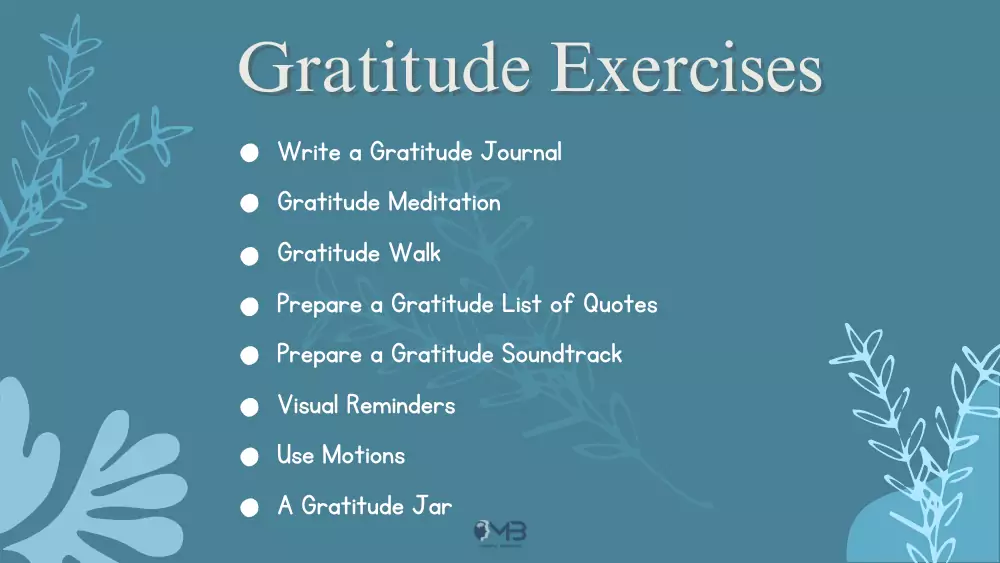
The best gratitude exercises are simple practices that help you notice, feel, and express appreciation. Good options include writing in a gratitude journal, taking a gratitude walk, sending a thank-you message, practicing gratitude meditation, making a gratitude list, using gratitude prompts, creating a gratitude jar, and reflecting on three good things before bed. The easiest exercise for beginners is writing down three specific things you appreciated today.
What Are Gratitude Exercises?
Gratitude exercises are small practices that train your attention to notice what is helpful, kind, meaningful, or steady in your life. They can be written, spoken, quiet, social, spiritual, or physical.
Some gratitude exercises are very simple, like writing three things you are thankful for. Others are more reflective, such as writing a letter to someone who changed your life or meditating on one moment that supported you.
The goal is not to force happiness. The goal is to practice noticing what your mind might normally rush past.
Best Gratitude Exercises at a Glance
| Exercise | Best For | Time Needed | Beginner Friendly? |
|---|---|---|---|
| Three Good Things | Daily reflection | 3 minutes | Yes |
| Gratitude Journal | Building a steady habit | 5 minutes | Yes |
| Gratitude Walk | Mindful movement | 10–20 minutes | Yes |
| Thank-You Message | Strengthening relationships | 2–5 minutes | Yes |
| Gratitude Meditation | Calming the mind | 5–10 minutes | Yes |
| Gratitude Jar | Visual reminders | 2 minutes | Yes |
| Gratitude Letter | Deep appreciation | 15–30 minutes | Mostly |
| Gratitude Reframe | Difficult days | 5 minutes | Yes, with care |
| Body Gratitude | Self-kindness | 5 minutes | Yes |
| Gratitude Prompts | When your mind feels blank | 5 minutes | Yes |
| Gratitude Affirmations | Morning mindset | 2–3 minutes | Yes |
| Gratitude Before Sleep | Evening calm | 3 minutes | Yes |
“If you prefer a digital format, you can also use gratitude apps from this list of MindfulBrowsing to build a steady habit.”
12 Simple Gratitude Exercises to Try
1. Write Down Three Good Things
This is the simplest gratitude exercise and the best place to start.
At the end of the day, write down three things that went well, helped you, comforted you, or made life slightly easier. They do not need to be impressive.
- A warm cup of tea
- A friend checking in
- A task you finally finished
- A few quiet minutes alone
- A meal that gave you energy
Try to be specific. Instead of writing “family,” write “my sister made me laugh when I felt tired.” Specific gratitude feels more real to the mind.
Best for: beginners, busy people, evening reflection
2. Keep a Gratitude Journal

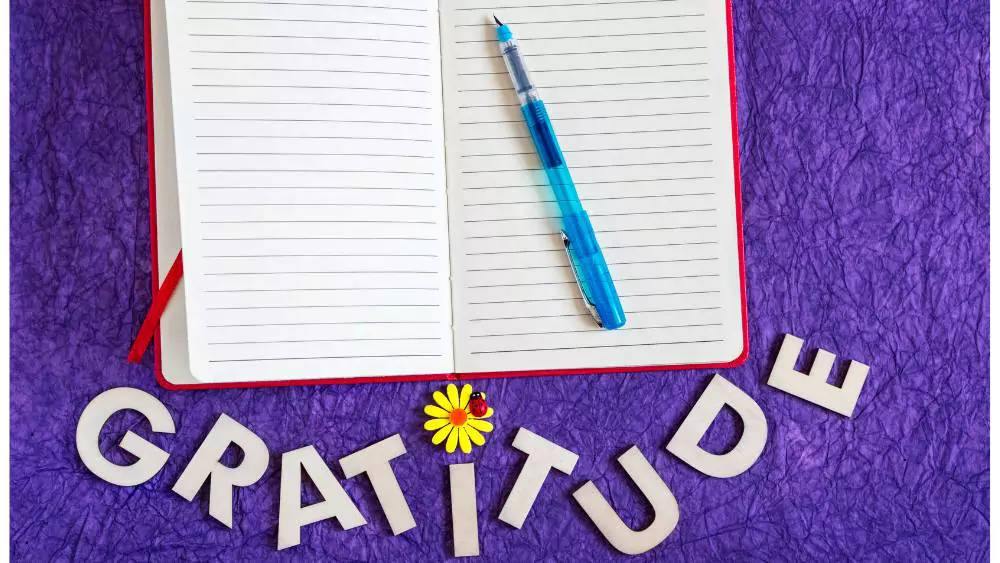
A gratitude journal gives your appreciation a place to live. It is one of the most popular gratitude exercises because it is simple, private, and easy to return to.
Dr. Robert Emmons from the University of California says you need no fancy journal to practice gratitude. You only need a simple notebook or a digital notepad to list daily things in your grateful list.
You can write three things every morning, one paragraph before bed, or a short list whenever your mind feels heavy. There is no perfect format.
Try this structure:
- One person I appreciate today
- One moment that helped me
- One thing I usually take for granted
Best for: long-term gratitude practice, self-reflection, emotional grounding
3. Take a Gratitude Walk

A gratitude walk combines movement with mindful attention. Go outside for 10 to 20 minutes and gently look for things you appreciate.
You might notice sunlight on a wall, trees moving in the wind, a neighbor’s garden, the feeling of your feet on the ground, or the fact that your body is carrying you through the day.
This exercise works well because it brings gratitude out of your head and into the world around you. You are not only thinking about thankfulness. You are seeing it, hearing it, and feeling it.
Best for: stress, mental clutter, screen fatigue, low energy
4. Send a Thank-You Message
Gratitude becomes stronger when it is expressed. Think of one person who made your life easier recently and send them a simple message.
You could write:
“I just wanted to say thank you for listening yesterday. It helped more than you probably realized.”
Or:
“I appreciate how steady you’ve been with me lately. I don’t say it enough, but it matters.”
A good thank-you message does not need to be dramatic. It only needs to be specific and sincere.
Gratitude can also strengthen friendships because people feel seen when their care is noticed.
Best for: relationships, friendship, emotional connection
5. Practice Gratitude Meditation

Gratitude meditation is a quiet exercise where you bring appreciation into your breath and body.
Sit comfortably. Stay focused. Close your eyes if that feels safe. Take a few slow breaths. Then bring one person, place, moment, or blessing into your awareness. Let yourself notice what it feels like to appreciate it.
You do not need to force a strong emotion. Some days, gratitude feels warm. Some days it feels quiet. Some days it simply feels like a small softening in the chest.
Best for: calm, mindfulness, emotional awareness
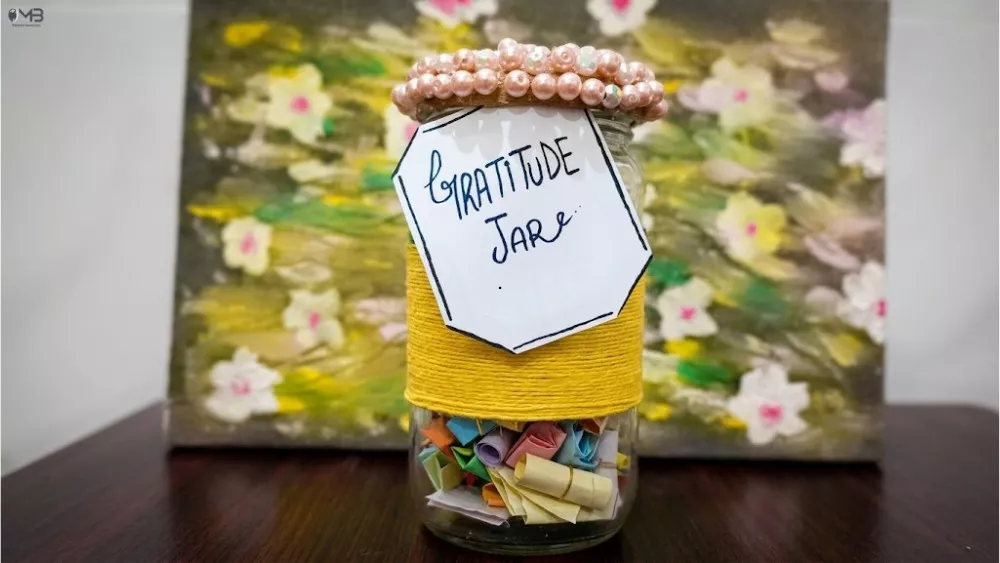
6. Create a Gratitude Jar
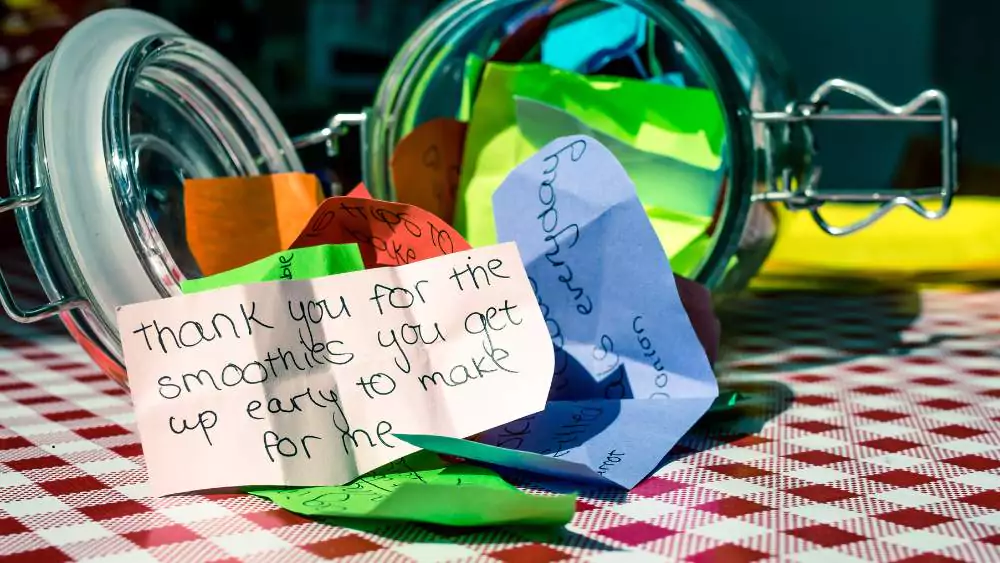
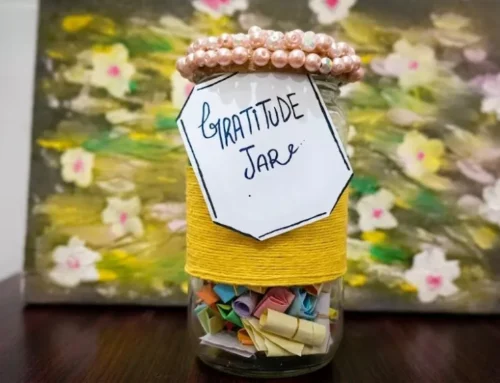
A gratitude jar is a visual way to collect good moments.
Take a jar, box, or small container. Whenever something meaningful happens, write it on a small piece of paper and place it inside.
You can add notes like:
- “A peaceful morning.”
- “My friend remembered my interview.”
- “I got through a difficult day.”
- “The sky looked beautiful tonight.”
Over time, the jar becomes proof that good things did happen, even on days your mind forgets.
Best for: families, couples, classrooms, visual reminders
7. Write a Gratitude Letter
A gratitude letter is a deeper exercise. Choose someone who helped you, taught you, encouraged you, protected you, or changed your life in a meaningful way. If you need inspiration to find the right words, you can reflect on these mindfulness gratitude quotes to help you get started.
Write a letter explaining what they did and why it mattered. You can send it, read it to them, or keep it private.
The power of this exercise is in detail. Do not only write, “Thank you for everything.” Tell them what you remember. Tell them how their kindness changed your day, your confidence, or your direction.
Best for: deep appreciation, healing, relationships, meaningful reflection
8. Try a Gratitude Reframe
A gratitude reframe is useful on difficult days. It does not ask you to pretend the problem is good. It asks you to notice what is still supporting you while the problem exists.
Instead of saying:
“Everything is terrible.”
Try:
“This is hard, and I am grateful I have one person I can talk to.”
Or:
“I do not like this situation, but I am grateful I am learning what I need.”
This exercise is not toxic positivity. It is honest with a little more space around it.
Best for: stress, disappointment, emotional resilience
9. Practice Body Gratitude
Many people speak to their bodies only when something feels wrong. Body gratitude is a gentle way to notice what your body does for you.
You might write:
- “Thank you to my legs for carrying me today.”
- “Thank you to my hands for helping me work.”
- “Thank you to my lungs for breathing, even when I forget to notice.”
- “Thank you to my body for asking for rest.”
This exercise should feel kind, not forced. You do not have to love every part of your body to appreciate something it helped you do.
Best for: self-kindness, body awareness, gentle healing
10. Use Gratitude Prompts
Some days, your mind may go blank. Gratitude prompts help you begin.
Try answering one of these:
- What made today a little easier?
- Who helped me recently?
- What is one comfort I often overlook?
- What is something I have now that I once hoped for?
- What part of today would I like to remember?
- What is one thing I appreciate about myself?
- What is one lesson I am grateful for?
The best prompt is the one that helps you answer honestly.
Best for: journaling, beginners, days when gratitude feels hard
11. Repeat Honest Gratitude Affirmations
Gratitude affirmations can be helpful, but only when they feel believable.
Instead of forcing yourself to say:
“Everything is perfect.”
Try something softer:
- “I can notice one good thing today.”
- “I am allowed to appreciate small moments.”
- “Even now, something is supporting me.”
- “I can be honest and grateful at the same time.”
Best for: morning routine, mindset, self-talk
12. End the Day With Gratitude Before Sleep
Before going to sleep, place one hand on your chest or rest quietly for a moment. Ask yourself:
“What is one thing from today I can appreciate?”
It might be a person, a meal, a completed task, a moment of rest, or the fact that the day is over.
This exercise can help your mind close the day more gently. You are not pretending every part of the day was good. You are simply choosing not to let stress have the final word.
Best for: evening calm, sleep routine, reflective practice
Which Gratitude Exercise Should You Start With?
If you are new to gratitude exercises, start with “Three Good Things.” It is short, simple, and easy to repeat. You only need a notebook, notes app, or a quiet moment.
Once that feels natural, try a gratitude journal or gratitude meditation. If you want to strengthen relationships, send a thank-you message or write a gratitude letter.
The best gratitude exercise is not the most impressive one. It is the one you can actually practice again tomorrow.
How Often Should You Practice Gratitude?
You can practice gratitude daily, but it does not have to become another pressure. For most people, three to five times a week is enough to begin building the habit.
If daily gratitude starts to feel repetitive, change the method. Walk instead of writing. Send a message instead of making a list. Use prompts instead of repeating the same three things.
Gratitude works best when it stays fresh, honest, and specific.
How to Practice Gratitude Without Toxic Positivity
Gratitude should not be used to silence pain.
Healthy gratitude says:
“This is difficult, and something is still helping me through it.”
Toxic positivity says:
“I should only focus on the good and stop feeling bad.”
There is a big difference.
You can be grateful and still be tired. You can appreciate support and still need change. You can notice one good thing and still admit that the day was hard.
That is the kind of gratitude that feels real.
Common Mistakes With Gratitude Exercises
Writing the Same Thing Every Day Without Feeling It
Repetition is fine, but try to add detail. Instead of “family,” write what someone did, said, or made easier.
Using Gratitude to Avoid Problems
Gratitude should support action, not replace it. You can be grateful for what you have and still need boundaries, rest, help, or change.
Trying to Feel Deeply Grateful Every Time
Some days gratitude will feel strong. Other days it will feel quiet. Both count.
Only Looking for Big Blessings
Small things are often where gratitude becomes easiest: clean water, a kind reply, a safe ride, a warm blanket, a little progress.
FAQs About Gratitude Exercises
What are gratitude exercises?
Gratitude exercises are simple practices that help you notice, feel, and express appreciation. Examples include gratitude journaling, gratitude meditation, thank-you messages, gratitude walks, gratitude jars, and writing down three good things each day.
What is the easiest gratitude exercise?
The easiest gratitude exercise is writing down three good things from your day. Keep them specific and simple. For example, “My friend checked on me,” or “I had a peaceful walk after work.”
Do gratitude exercises really work?
Gratitude exercises may support wellbeing, emotional balance, and relationships when practiced regularly. They are not a cure for every problem, but they can help train attention toward what is meaningful, supportive, or good.
How often should I do gratitude exercises?
You can practice gratitude daily, but three to five times a week is a realistic starting point. The key is consistency, honesty, and specificity rather than forcing yourself to write a long list every day.
What are good gratitude exercises for anxiety or stress?
Gentle options include gratitude meditation, body gratitude, a gratitude walk, or writing one thing that is helping you cope today. These exercises should feel grounding, not pressured.
What are gratitude exercises for kids?
Simple gratitude exercises for kids include drawing something they are thankful for, making a gratitude jar, saying one good thing at dinner, writing thank-you cards, or naming one kind thing someone did for them.
Can gratitude exercises become toxic positivity?
Yes, if gratitude is used to deny pain or pressure someone to feel happy. Healthy gratitude allows both truths: life can be hard, and there can still be something worth appreciating.
Final Thoughts
Gratitude exercises are small, but they can be powerful when practiced with honesty. They help you notice the parts of life that are easy to rush past: kindness, comfort, effort, beauty, support, and progress.
You do not need to feel thankful for everything. You do not need to pretend life is easy. You only need to begin noticing what is still meaningful.
Start with one exercise. Write three good things. Send one thank-you message. Take one gratitude walk. Sit for one quiet breath.
Gratitude grows through practice, and the practice can begin today.
About the Author: Jessica Erik