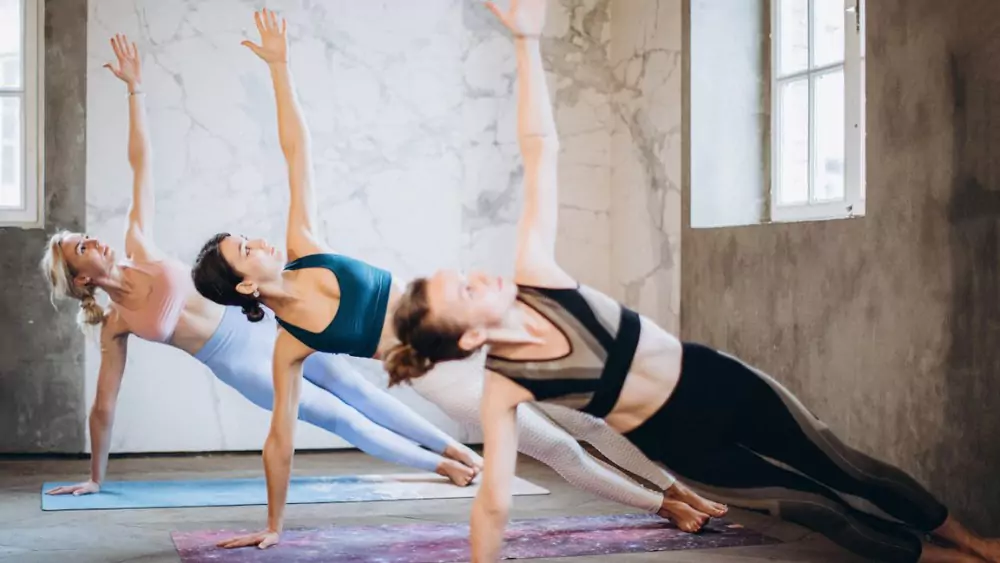

The first thing you notice in two-person yoga is that you cannot rush. The moment you lean too quickly, pull too hard, or stop listening, the pose tells on you.
That is the beauty of it. Partner yoga is not just about flexibility or balance. It teaches you how to move with another person without taking over their body. You learn to ask, wait, adjust, laugh, and try again.
Quick Take: What Are the Best 2 Person Yoga Poses?
The best 2 person yoga poses are the ones both partners can enter, hold, and leave without strain. Beginners should start with Partner Seated Breathing, Seated Cat-Cow, Partner Twist, Partner Forward Fold, Double Tree Pose, and Back-to-Back Chair Pose. These build trust before strength. Once both people feel steady, poses like Double Boat, Partner Warrior II, Double Plank, and Double Downward Dog can add challenge. Acro-style poses such as Flying Bird or Folded Leaf should be saved for experienced partners, mats, and a spotter.
Some 2 person yoga poses are quiet and simple, like sitting back-to-back and breathing together. Others feel playful, wobbly, or surprisingly strong. The best practice begins with easy poses, clear communication, and zero pressure to look impressive.
What Are 2 Person Yoga Poses?
2 person yoga poses are yoga poses practiced by two people together. Some are gentle partner stretches. Some are balance poses. Some are strength-based shapes. A few are closer to acro yoga because one person supports part of the other person’s body weight.
Partner yoga can be practiced by couples, friends, siblings, parents and teens, or two people in a yoga class. It does not have to be romantic. The real purpose is connection: breathing together, communicating clearly, and learning how to support each other without force.
Think of it this way: partner yoga is not about making two bodies fit into a shape. It is about helping two people listen better while they move.
If you later want to try larger group shapes, you can move from this guide into our three person yoga poses or 4 person yoga poses guides after you feel steady with the basics.
Before You Try Partner Yoga
Before the first pose, agree on one simple rule: either person can say “pause” or “stop” at any time, and the other person listens immediately.
This matters more than the pose itself. In two-person yoga, your body is not the only body involved. Your partner’s breath, balance, fear, flexibility, and comfort all matter too.
- Use yoga mats or a non-slip surface.
- Start with seated or standing poses before trying acro-style poses.
- Do not pull your partner deeper into a stretch.
- Do not place weight on the neck, head, lower back, or joints.
- Move slowly enough that both people can breathe comfortably.
- Stop if either person feels sharp pain, dizziness, panic, or pressure.
- Use a spotter for lifted, inverted, stacked, or acro-inspired poses.
A good partner yoga practice should feel shared, not forced. If one person is uncomfortable, the pose is not working yet.
Best 2 Person Yoga Poses by Difficulty
| Pose | Difficulty | Best For | Beginner Safe? |
|---|---|---|---|
| Partner Seated Breathing | Easy | Calm, connection, warm-up | Yes |
| Seated Cat-Cow | Easy | Spine mobility and breathing | Yes |
| Partner Seated Twist | Easy | Gentle back release | Yes |
| Partner Forward Fold | Easy | Hamstrings and lower back | Yes, with caution |
| Double Tree Pose | Easy to Moderate | Balance and trust | Mostly |
| Back-to-Back Chair Pose | Moderate | Leg strength and teamwork | Yes, with control |
| Double Boat Pose | Moderate | Core strength and balance | Mostly |
| Partner Warrior II | Moderate | Grounding and focus | Yes |
| Supported Partner Backbend | Moderate | Chest opening and trust | With caution |
| Double Plank | Moderate to Hard | Core, shoulders, arms | No, unless experienced |
| Double Downward Dog | Hard | Strength and coordination | No |
| Partner Camel and Child’s Pose | Hard | Chest opening and back support | With guidance |
| Flying Bird Pose | Advanced | Acro yoga and trust | No |
| Folded Leaf | Advanced | Acro yoga and release | No |
| Partner Dancer Pose | Advanced | Balance and flexibility | No |
Easy 2 Person Yoga Poses for Beginners
1. Partner Seated Breathing

Difficulty: Easy
Best for: Starting the practice, calming nerves, building trust
Sit back-to-back with your partner. Let your spine be tall, but not stiff. Let your shoulders drop. At first, do not try to match your partner’s breath. Just notice it. Feel how their back expands slightly when they inhale and softens when they exhale.
After a few breaths, begin to slow down together. You may naturally find the same rhythm, or you may not. Both are fine. The point is not perfect timing. The point is learning how to pay attention.
Stay here for 5 to 10 slow breaths.
Yoga specialist note: This is the pose I would start with every time. It looks almost too simple, but it teaches the foundation of partner yoga: awareness before movement.
2. Seated Cat-Cow
Difficulty: Easy
Best for: Spine mobility, warm-up, gentle coordination
Sit facing your partner. You can sit cross-legged or with your knees softly bent. Hold each other’s hands, wrists, or forearms. Keep the grip light.
As you inhale, lift your chest and gently draw your shoulders back. As you exhale, round your spine and let your chin soften slightly toward your chest. Move like this for 5 to 8 rounds.
Try not to pull each other through the movement. Let the breath lead. Your hands are only there to help you feel connected.
Safety note: This should feel smooth in the back and shoulders. If the grip creates tension, loosen it or place your hands on your own knees.
3. Partner Seated Twist
Difficulty: Easy
Best for: Gentle back release, posture, mindful breathing
Sit back-to-back with your partner. Take a breath in and lengthen through the spine. As you exhale, twist gently to one side. You can place one hand on your own knee and the other lightly on your partner’s knee or thigh.
Stay for 3 to 5 breaths, then return to the center and switch sides.
Keep the movement soft. A good twist does not need to be dramatic. It should feel like your spine has more room, not like you are trying to wring something out of the body.
Yoga specialist note: Think “length first, twist second.” If you lose the length in your spine, you have probably gone too far.
4. Partner Forward Fold
Difficulty: Easy
Best for: Hamstrings, lower back, calming down
Sit facing your partner with legs extended wide or gently bent. Hold hands or forearms. One person slowly leans back while the other folds forward from the hips. After a few breaths, switch roles.
The folding partner should decide the depth. The leaning partner should not pull. The pose works best when both people keep checking in.
You can say:
“Is this enough?”
or:
“Do you want less pull?”
Safety note: Bend the knees if the hamstrings or lower back feel tight. A small fold with steady breathing is better than a deep fold with strain.
5. Double Tree Pose

Difficulty: Easy to Moderate
Best for: Balance, focus, trust
Stand side by side with your partner. Wrap your inside arm gently around your partner’s waist or shoulder. Shift your weight into the inside leg. Place the outside foot on the ankle, calf, or inner thigh. Avoid pressing into the knee.
Bring your outside hand to your heart or reach it upward. Hold for 3 to 5 breaths, then switch sides.
Expect a little wobble. That is not failure. It is feedback. The practice is learning how to steady yourself without gripping your partner too hard.
Yoga specialist note: Beginners can keep the lifted toes on the floor. That still counts. Balance grows better when the pose feels relaxed.
Moderate Partner Yoga Poses for Two People
6. Back-to-Back Chair Pose
Difficulty: Moderate
Best for: Leg strength, teamwork, trust
Stand back-to-back with your partner. Place your feet hip-width apart and walk them slightly forward. Press your backs gently together, then slowly bend your knees and lower into a chair position.
Do not drop suddenly. Move like you are both sitting into the same invisible chair. Keep the knees over the ankles and the chest steady.
Hold for 3 to 5 breaths, then press into the feet and rise together.
Safety note: Stop before your legs shake too much. The pose should feel strong, not like both people are about to collapse.
7. Double Boat Pose
Difficulty: Moderate
Best for: Core strength, balance, laughter, and teamwork
Sit facing your partner with your knees bent and your toes close. Hold hands or wrists. Lift one foot each and press the soles of your feet together. If both of you feel steady, lift the second foot too.
Keep the knees bent at first. Many people try to straighten the legs too early, then the whole pose turns into a fight with the hamstrings. Stay lifted through the chest. Breathe. If you wobble, smile and reset.
Yoga specialist note: Bent knees are not the beginner version. They are often the smarter version. The pose should feel alive in the core, not painful in the lower back.
8. Partner Warrior II
Difficulty: Moderate
Best for: Grounding, focus, leg strength
Stand side by side or facing opposite directions, depending on your space. Step into Warrior II with the front knee bent and the back leg strong. Reach one arm toward your partner and lightly touch hands or fingertips.
Keep your own alignment first. Your front knee should point in the same direction as your toes. Your back leg should feel rooted. The partner connection should be light, not pulling you out of your base.
Hold for 3 to 5 breaths, then switch sides.
Yoga specialist note: In partner poses, connection should support alignment, not steal it.
9. Supported Partner Backbend
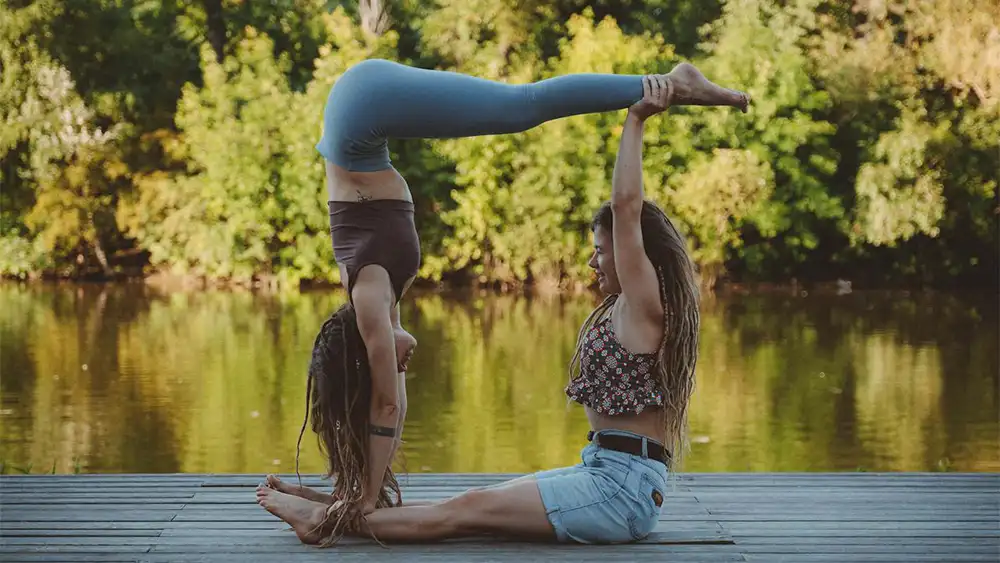
Difficulty: Moderate
Best for: Chest opening, posture, gentle trust
Stand back-to-back. One partner bends the knees slightly and leans forward just enough to offer support. The other partner slowly leans back over the upper back, opening the chest and arms.
Keep this small. This is not a dramatic drop-back. The partner leaning back should feel supported, not thrown into space.
Hold for 2 to 4 breaths, then return slowly and switch roles.
Safety note: Skip this pose if either person has back pain, neck pain, shoulder pain, dizziness, or fear around backbends.
10. Double Plank

Difficulty: Moderate to Hard
Best for: Core strength, shoulders, confidence
One partner starts in a strong plank. The second partner comes into plank facing the same direction and carefully places their feet on the base partner’s upper back or hips, depending on the variation and experience level.
This pose should be short and controlled. The base should feel stable before the second partner adds weight. The top partner should move slowly and step down with care.
Safety note: Do not place weight on the lower back, neck, or head. If either person is unsure, use a spotter or skip this pose.
Hard 2 Person Yoga Poses for Experienced Partners
11. Double Downward Dog
Difficulty: Hard
Best for: Strength, hamstrings, shoulders, teamwork
One partner starts in Downward Dog. The second partner stands in front, places their hands on the floor, and carefully places their feet near the first partner’s hips or upper thighs.
Both people should move slowly. The base partner must feel stable before the second partner adds weight. The top partner should avoid stepping onto the lower spine, shoulders, neck, or head.
Hold for 2 to 4 breaths, then come down carefully.
Yoga specialist note: This pose often looks easier in photos than it feels in real life. Use a spotter the first few times.
12. Partner Camel and Child’s Pose
Difficulty: Hard
Best for: Chest opening, back-body awareness, emotional softness
One partner rests in Child’s Pose. The other partner kneels behind them and slowly moves into a gentle Camel Pose. The grounded partner is not there to be pushed into. They are there as a calming reference point.
The person in Camel should lift through the chest instead of collapsing into the lower back. Keep the neck long and the breath easy.
Safety note: Skip this if either person has neck, lower-back, knee, or dizziness concerns.
Advanced Acro-Inspired Yoga Poses for Two People
13. Flying Bird Pose
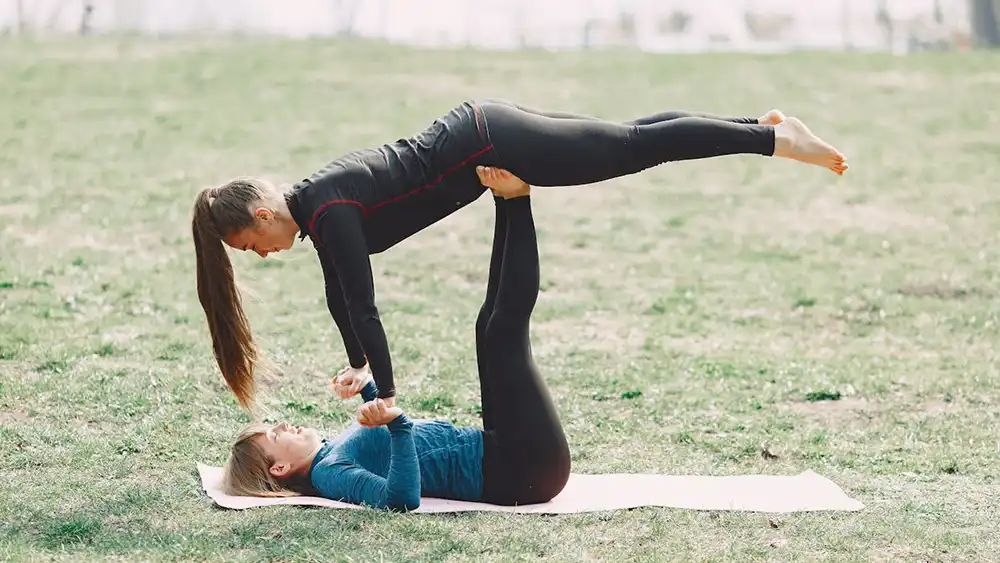
Difficulty: Advanced
Best for: Acro yoga, trust, communication, strength
In Flying Bird, one person becomes the base and lies on their back with legs lifted. The flyer places their hips near the base’s feet and leans forward while both partners hold hands. The base supports the flyer through the legs and arms.
This pose needs clear roles. The base should feel strong and grounded. The flyer should move slowly and keep communicating. A spotter should stand nearby, especially during the first attempts.
Safety note: Do not try Flying Bird for the first time alone. Use mats, a trained instructor or experienced spotter, and clear verbal cues.
14. Folded Leaf
Difficulty: Advanced
Best for: Acro yoga, release, trust
Folded Leaf is an acro yoga pose where the flyer folds forward over the base’s feet while the base lies on their back. When done well, it can feel surprisingly calm. When done carelessly, it can place too much pressure on the flyer’s body.
The flyer should never feel trapped, compressed, or unable to breathe. The base should stay steady and responsive. The spotter should help the flyer enter and exit safely.
Safety note: Learn this with a trained acro yoga instructor before trying it on your own.
15. Partner Dancer Pose
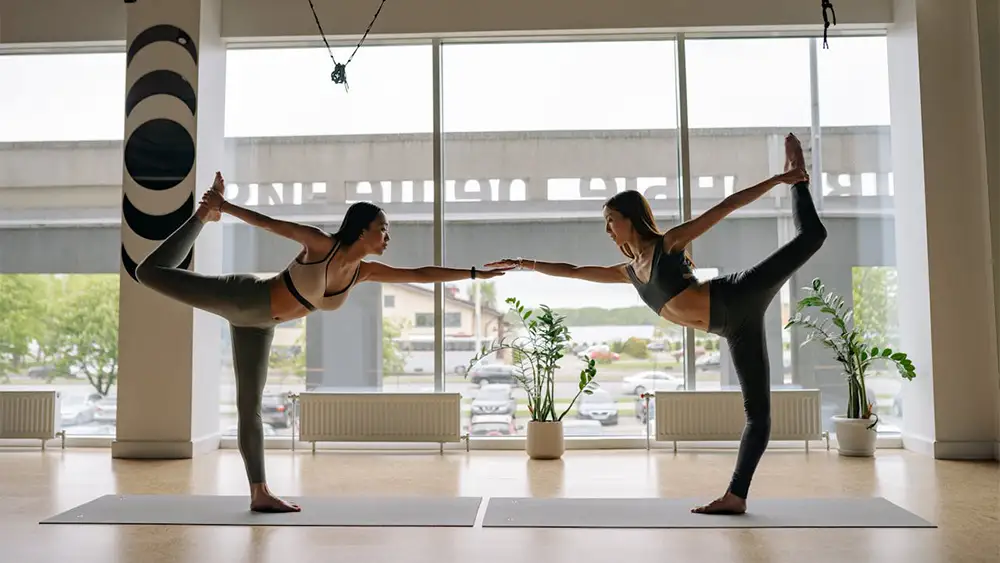
Difficulty: Advanced
Best for: Balance, flexibility, focus
Stand facing your partner. Each person bends one knee and catches the foot or ankle behind them, moving into Dancer Pose. Hold each other’s opposite hand for balance. Slowly lift the chest and press the back foot into the hand.
Do not rush the lift. This pose asks for balance, open shoulders, and patience. If the standing leg feels shaky, stay close to a wall.
Hold for 2 to 4 breaths, then release slowly and switch sides.
Safety note: Avoid this pose if either person has knee, ankle, shoulder, or balance concerns.
What Is the Easiest 2 Person Yoga Pose?
The easiest 2 person yoga pose is Partner Seated Breathing. Both people sit back-to-back, breathe slowly, and notice each other’s rhythm without stretching, balancing, or lifting.
It is the safest starting point because there is no pressure on the joints and no need to hold another person’s body weight. After that, try Seated Cat-Cow, Partner Seated Twist, Partner Forward Fold, and Double Tree Pose.
Do You Need a Spotter for 2 Person Yoga?
You do not need a spotter for simple seated and standing poses. You should use a spotter for any pose that involves lifting, flying, stacking, inversion, or one person placing body weight on the other.
A good spotter does not just stand nearby. They watch alignment, help with entry and exit, and speak up before a small wobble becomes a fall. In acro-style poses, the spotter is part of the practice, not an extra.
Benefits of Two Person Yoga Poses
Partner yoga can support both physical and emotional connection when it is practiced carefully. The benefits are not only about stretching deeper. In fact, deeper is not always better.
- Trust: You learn to support and be supported.
- Communication: You have to speak clearly before moving deeper.
- Balance: Standing poses teach shared steadiness.
- Flexibility: Gentle partner stretches can help you move with more awareness.
- Mindfulness: You cannot rush when another person’s body is involved.
- Connection: Moving together can feel playful, calming, and bonding.
If you are practicing with a romantic partner, you may also enjoy our guide on meditation for couples. It gives a quieter way to build connection without needing difficult poses.
Who Should Avoid Partner Yoga Poses?
Skip difficult partner yoga poses if either person has a recent injury, serious back pain, neck pain, shoulder pain, wrist pain, balance concerns, dizziness, or is pregnant without professional guidance.
Simple seated breathing or gentle supported stretches may still be possible for many people, but anything acro-style should be treated carefully. When in doubt, choose the simpler pose. Yoga should leave the body feeling clearer, not more stressed.
How to Make Partner Yoga Feel Less Awkward
Partner yoga can feel awkward at first. That is normal. You are coordinating breath, balance, touch, timing, and trust at the same time.
Start with simple poses. Laugh when balance fails. Speak before adjusting. Ask, “Does this feel okay?” more often than you think you need to.
The awkwardness usually fades when both people stop trying to look impressive. The practice becomes easier when the goal changes from “Can we do the pose?” to “Can we stay kind and aware while trying?”
If you are practicing with a partner and want to improve connection outside the mat too, our guide on how to be a better partner may fit naturally after the practice.
What to Do After Partner Yoga
Do not rush away from the mat. Sit quietly for a minute. Notice your breath. Notice your body. Notice whether the practice made you feel calm, playful, tired, open, or connected.
You can also thank your partner for practicing with you. It may sound small, but gratitude helps close the session with warmth instead of performance.
A short gratitude meditation can be a beautiful way to end, especially after a practice that required trust.
FAQs About 2 Person Yoga Poses
Easy 2 person yoga poses include Partner Seated Breathing, Seated Cat-Cow, Partner Seated Twist, Partner Forward Fold, Double Tree Pose, and Back-to-Back Chair Pose. These poses are beginner-friendly because they do not require lifting or advanced flexibility.
The easiest 2 person yoga pose is Partner Seated Breathing. Both partners sit back-to-back and breathe slowly. It is safe, simple, and helps both people settle before trying movement or balance.
Hard yoga poses for 2 people include Double Downward Dog, Double Plank, Flying Bird, Folded Leaf, Partner Dancer Pose, and advanced acro yoga variations. These should be practiced with mats, clear communication, and a spotter when needed.
Yes, 2 person yoga poses can be good for couples because they encourage trust, communication, patience, and shared movement. They are also useful for friends, siblings, and yoga partners, so they do not have to be romantic.
Beginners can try partner yoga if they start with easy seated or standing poses. They should avoid acro-style poses, flying poses, and stacked poses until they have more experience or guidance from a trained instructor.
Some 2 person yoga poses are acro yoga, especially if one person is lifting, flying, balancing on, or being supported by the other. Simple seated stretches and standing partner poses are better described as partner yoga or couples yoga.
After partner yoga, sit quietly for a few breaths, drink water, and notice how your body feels. You can also close with a short gratitude meditation to appreciate the trust and support shared during the practice.
Final Thoughts
Two-person yoga is not about making the most impressive shape. It is about learning how to listen, breathe, move, and adjust with another person.
Start with the poses that feel calm and steady. Build trust before trying anything acro-inspired. Use mats, communicate clearly, and stop before a pose becomes shaky or forced.
The best partner yoga practice is not the one that looks perfect in a photo. It is the one where both people feel safe, respected, and a little more connected when they leave the mat.
About the Author: Jessica Erik