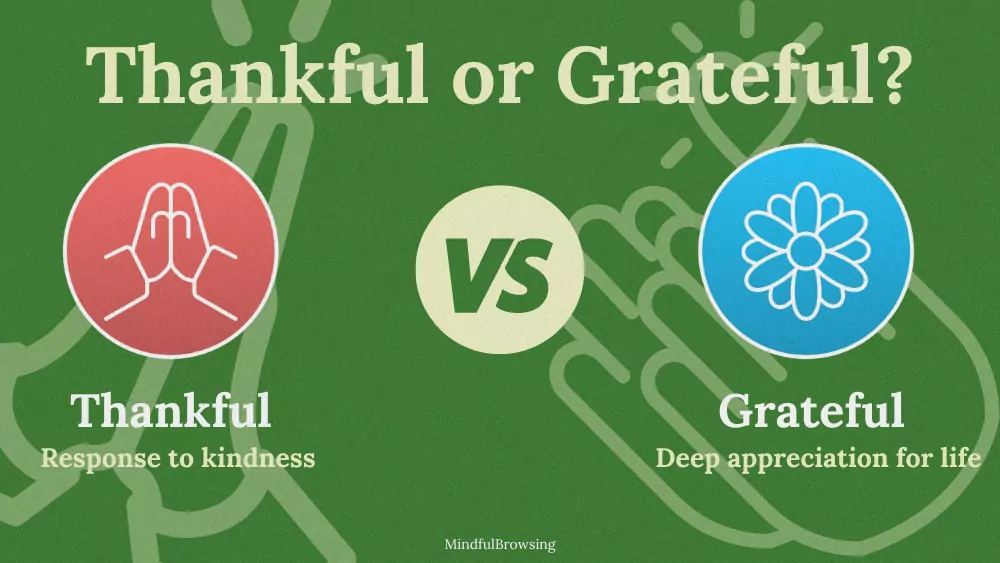
The difference between thankful and grateful is small, but it matters. Thankful usually describes a present feeling of relief or appreciation. Grateful often feels deeper and more lasting, especially when you recognize how someone, something, or a life experience has meaningfully helped you.
You can be thankful for a kind message, a warm meal, or a problem that did not happen. You can be grateful for a person who stood by you, a lesson that changed you, or a life season that helped you grow.
Quick Answer: Thankful vs Grateful
Thankful means feeling pleased, relieved, or appreciative because of something good that happened. Grateful means feeling or showing deeper appreciation, often toward a person, kindness, opportunity, or meaningful part of life. In everyday use, the words overlap, but thankful often fits short-term moments, while grateful often fits deeper appreciation.
What Is the Difference Between Thankful and Grateful?
The simplest difference is this: thankful is often a response to a moment, while grateful is often a deeper recognition of meaning.
For example, you may feel thankful when traffic clears and you reach work on time. That is a real feeling of relief. But you may feel grateful for a friend who has supported you through a difficult year. That feeling usually carries more emotional depth.
Still, the two words are closely related. Dictionary.com notes that both grateful and thankful can mean feeling or expressing gratitude. Cambridge also explains that thankful is often used when someone feels relieved that something unpleasant or dangerous did not happen.
So the difference is not a hard rule. It is more about tone, depth, and context.
Thankful vs Grateful at a Glance
| Word | Simple Meaning | Best Used For | Example |
|---|---|---|---|
| Thankful | Feeling pleased, relieved, or appreciative | A specific event, help, favor, or good outcome | I am thankful the storm passed safely. |
| Grateful | Feeling deeper appreciation or recognition | A person, relationship, lesson, opportunity, or meaningful support | I am grateful for the people who stayed with me. |
What Does Thankful Mean?
Thankful means feeling appreciation, often because something good happened or something bad was avoided. It is closely tied to a specific moment.
You might feel thankful when:
- someone holds the door for you
- a friend checks in at the right time
- your flight is not delayed
- you find something you thought you lost
- a difficult situation turns out better than expected
Thankfulness can be simple and immediate. It does not have to be dramatic. It is often the feeling behind everyday sentences like “thank you,” “I appreciate that,” or “I’m thankful this worked out.”
What Does Grateful Mean?
Grateful means feeling or showing appreciation for kindness, support, opportunity, life, growth, or something meaningful. It can include thankfulness, but it often feels more reflective.
The APA Dictionary of Psychology defines gratitude as a sense of thankfulness and happiness in response to receiving a tangible benefit, a favor, or even a fortunate event such as a beautiful day. Merriam-Webster also defines gratitude as the state of being grateful or thankfulness.
You might feel grateful when:
- someone helped you through a hard season
- you recognize how much your health means to you
- a painful lesson made you wiser
- your family or friends make life feel safer
- you notice ordinary things you once took for granted
Gratefulness often goes beyond the event itself. It asks, “Why does this matter to me?”
Thankful vs Grateful: Easy Examples
| Situation | Thankful Example | Grateful Example |
|---|---|---|
| A friend brings you coffee | I am thankful for the coffee. | I am grateful for a friend who notices when I need care. |
| You recover from a hard week | I am thankful this week is over. | I am grateful I had the strength to get through it. |
| Someone gives advice | I am thankful for your advice. | I am grateful for the way you guide me without judging me. |
| You have a quiet morning | I am thankful for this peaceful morning. | I am grateful for small moments that help me feel grounded. |
| A problem is avoided | I am thankful nothing worse happened. | I am grateful this experience reminded me what matters. |
When Should You Use Thankful?
Use thankful when you are talking about a specific moment, favor, event, or outcome.
For example:
- I am thankful for your help today.
- I am thankful we arrived safely.
- I am thankful the meeting went well.
- I am thankful for this meal.
- I am thankful that nothing serious happened.
Thankful is especially natural when relief is part of the feeling. Cambridge notes that thankful is often used when someone is relieved that something unpleasant or dangerous did not happen.
When Should You Use Grateful?
Use grateful when the feeling is deeper, more personal, or more reflective.
For example:
- I am grateful for your friendship.
- I am grateful for everything my parents taught me.
- I am grateful for the chance to start again.
- I am grateful for the people who believed in me.
- I am grateful for the lesson, even though it was hard.
Grateful often fits when the appreciation is not only about what happened, but about what it meant.
Can You Be Thankful and Grateful at the Same Time?
Yes. You can be thankful and grateful at the same time.
For example, if a friend helps you move, you may be thankful for the practical help. You may also be grateful for the friendship behind that help.
Thankful notices the action. Grateful notices the meaning.
That is why both words can belong together. Thankfulness can be the doorway. Gratitude can be the deeper room.
The Mindful Difference Between Thankful and Grateful

From a mindfulness point of view, thankfulness is often the pause where you notice something good. Gratefulness is what happens when you stay with that good thing long enough to understand why it matters.
For example:
I am thankful for this quiet cup of coffee.
That is a good start. But if you pause a little longer, it may become:
I am grateful for this quiet moment because it gives me space to breathe before the day begins.
That small shift turns a simple thank-you into a deeper awareness.
If you want to build this kind of awareness daily, our guide on attitude of gratitude explains how gratitude becomes a calmer way of paying attention to life.
Thankful vs Grateful in Relationships
In relationships, thankful and grateful can both make people feel seen.
Thankful sounds like:
Thank you for helping me today.
Grateful sounds like:
I am grateful for how steady you have been with me lately.
The first sentence appreciates the action. The second appreciates the person and the pattern of care.
Both matter. Small thank-yous keep everyday connection warm. Deeper gratitude helps people feel valued, not just useful.
How to Turn Thankfulness Into Gratitude
You do not need to force yourself into a deep emotional state. Just ask one extra question:
Why does this matter to me?
That question is the bridge between being thankful and being grateful.
| Thankful Thought | Bridge Question | Grateful Reflection |
|---|---|---|
| I am thankful for this meal. | Why does it matter? | I am grateful my body has nourishment today. |
| I am thankful my friend called. | Why does it matter? | I am grateful I have someone who notices when I am quiet. |
| I am thankful the day is over. | Why does it matter? | I am grateful I made it through a hard day and can rest now. |
| I am thankful for my job. | Why does it matter? | I am grateful for the stability and growth it gives me. |
A Simple Thankful vs Grateful Exercise
Try this short gratitude exercise when you want your gratitude practice to feel more honest.
- Name one thing you are thankful for. Keep it simple.
- Ask why it matters. Do not rush the answer.
- Notice who or what is connected to it. A person, effort, lesson, or support.
- Write one grateful sentence. Make it specific.
Example:
I am thankful for my quiet walk today. I am grateful for the way walking helps me return to myself.
You can also use this inside a gratitude journal when your entries start to feel repetitive.
Common Mistakes When Comparing Thankful and Grateful
Thinking One Word Is Better Than the Other
Grateful is not automatically better than thankful. Thankfulness is still meaningful. A sincere “thank you” can change the tone of a whole day.
Forcing a Deep Meaning Every Time
Not every moment needs a big lesson. Sometimes you are simply thankful that the coffee is warm or the rain stopped. That counts.
Using Gratitude to Ignore Hard Feelings
Gratitude should not be used to silence pain. You can be grateful and still be tired, sad, stressed, or disappointed.
Making the Difference Too Strict
In real life, people use thankful and grateful interchangeably. The difference is useful, but it should not become a grammar trap.
Thankful vs Grateful vs Appreciative
These three words overlap, but they have slightly different tones.
| Word | Tone | Example |
|---|---|---|
| Thankful | Immediate, relieved, appreciative | I am thankful you helped me today. |
| Grateful | Deeper, reflective, heartfelt | I am grateful for your support over the years. |
| Appreciative | Polite, respectful, aware of value | I am appreciative of your time and effort. |
How to Practice Both in Daily Life
A balanced gratitude practice uses both thankfulness and gratefulness.
- Say thank you quickly. Do not wait for the perfect words.
- Write grateful reflections slowly. Give deeper appreciation time to form.
- Notice small comforts. Food, rest, safety, water, light, and quiet all count.
- Thank people specifically. Tell them what they did and why it helped.
- Use hard days gently. Ask what supported you, not what you should pretend to enjoy.
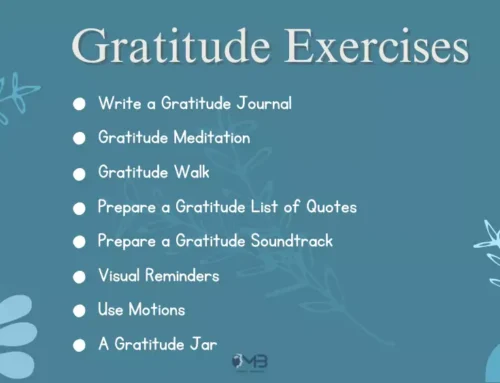
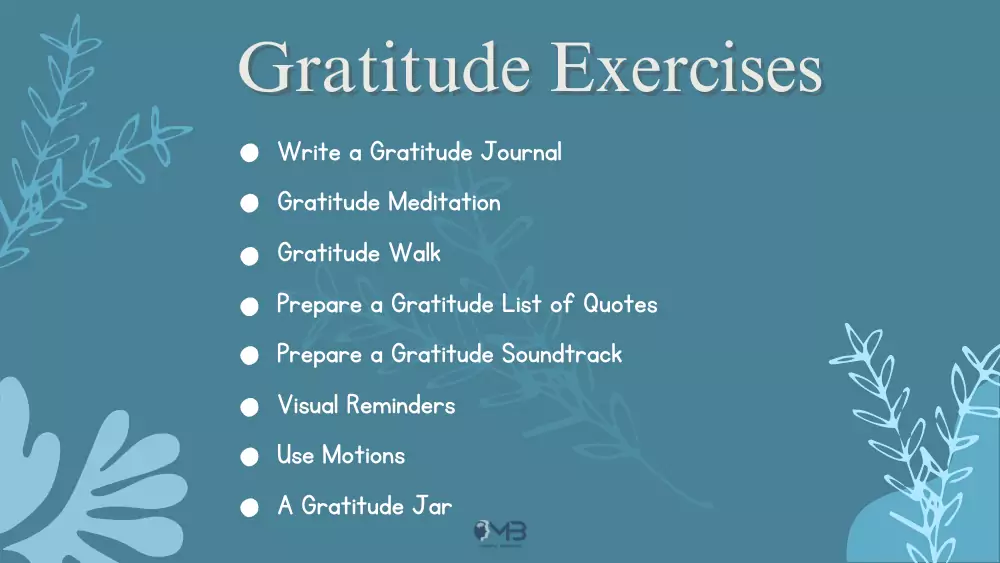
For more practice ideas, explore our guides on
- Gratitude Journal Prompts
- Gratitude Lists
- Gratitude Meditation
- Gratitude Apps
- Gratitude Tree
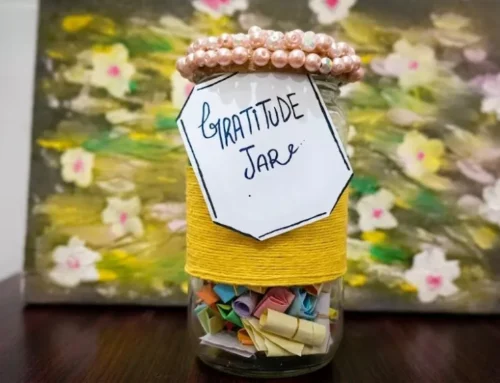
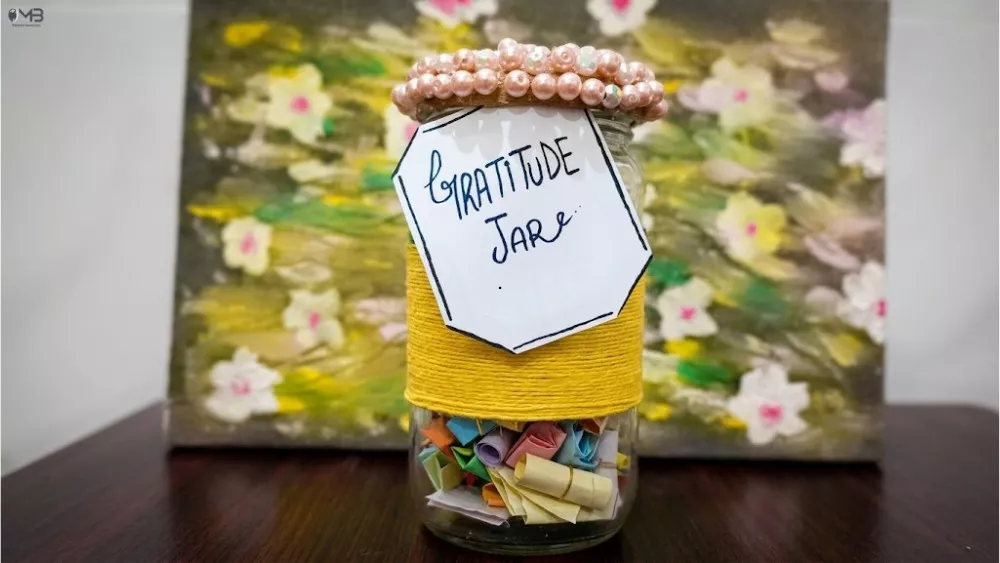
- Gratitude Jar
- Gratitude Quotes
FAQs About Thankful vs Grateful
Thankful usually means feeling pleased, relieved, or appreciative because of a specific event, favor, or outcome. Grateful often means feeling deeper appreciation for a person, kindness, opportunity, lesson, or meaningful part of life.
Grateful often feels stronger or deeper than thankful, but not always. Thankful can be sincere and meaningful too. The difference depends on context, tone, and what you are appreciating.
Yes, thankful and grateful are often used interchangeably in everyday English. However, thankful often fits immediate appreciation or relief, while grateful often fits deeper, more reflective appreciation.
Both are correct. You can say “thankful for your help” or “grateful for your help.” If you want the sentence to feel deeper or more heartfelt, “grateful” often sounds more personal
Final Thoughts
Thankful and grateful are close words, but they do not always feel the same.
Thankful often begins with a moment: someone helped, something worked out, or a problem was avoided. Grateful often goes deeper: you recognize the meaning behind the moment, the person, the lesson, or the support.
You do not have to choose one word forever. Use thankful when appreciation feels immediate. Use grateful when appreciation feels deeper. Both can make ordinary life feel more noticed, more honest, and more meaningful.
About the Author: Muhammad Moazzan